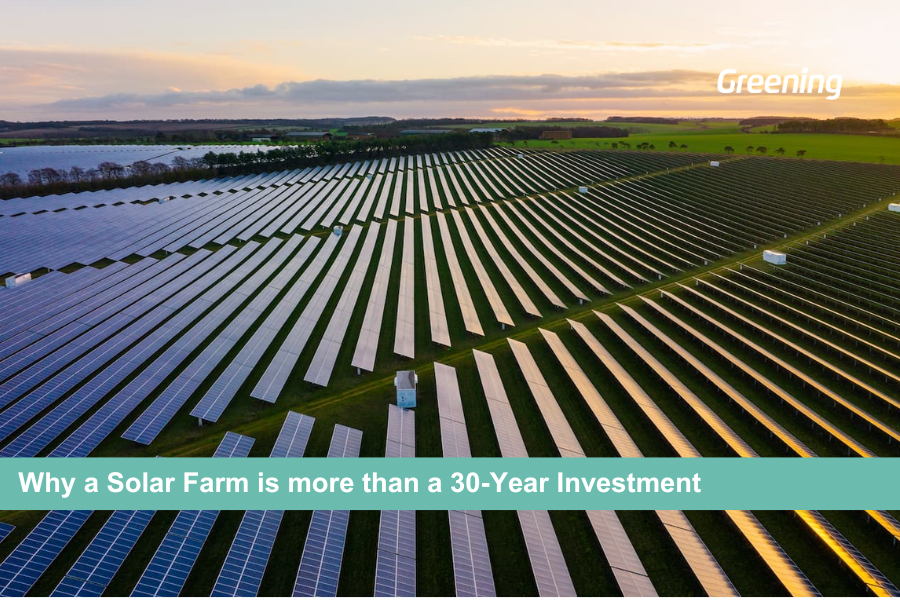
Utility-scale solar projects are built to deliver long-term value, not only through decades of clean energy generation, but also through their ability to adapt, improve, and continue supporting the evolving needs of the power grid.
As the U.S. continues to expand its renewable energy portfolio, utility-scale solar has become one of the country’s fastest-growing sources of electricity. While much of the conversation focuses on how these projects are built and how much energy they produce, one question deserves more attention:
What makes a solar farm a smart long-term investment?
The answer goes beyond its expected operating life. Modern solar farms are designed as long-term infrastructure assets that can evolve with technology, maximize land value, and continue delivering benefits for decades.
Built to Perform for the long run
Utility-scale solar projects are engineered with durability in mind. High-quality photovoltaic (PV) modules are designed to operate reliably for decades, gradually losing only a small percentage of their efficiency each year.
Rather than experiencing a sudden decline in performance, solar panels generate electricity consistently over time, providing predictable energy production and stable operating costs. This long-term reliability is one of the reasons solar has become an increasingly attractive investment for utilities, independent power producers, and corporate energy buyers.
According to the National Renewable Energy Laboratory (NREL), advances in module manufacturing and quality have continued to improve the reliability and expected lifetime of today’s solar technologies.
Infrastructure that can evolve
One of the greatest strengths of utility-scale solar is its adaptability.
As solar technology continues to advance, project owners have opportunities to modernize key components, including modules, inverters, and electrical systems, to improve overall performance. This process, commonly known as repowering, allows existing sites to benefit from higher-efficiency equipment without developing an entirely new project.
In many cases, newer PV modules can generate significantly more electricity than earlier generations while using the same project footprint. By upgrading equipment over time, owners can enhance energy production, optimize existing infrastructure, and extend the long-term value of their assets.
Rather than representing the end of a project’s lifecycle, technological improvements create new opportunities for continued performance and efficiency.
Maximizing the value of every site
A utility-scale solar project represents much more than installed equipment; it’s a carefully planned energy asset supported by engineering, electrical infrastructure, grid interconnection, and long-term operations.
Because these elements are already in place, modernizing a facility can often be more efficient than starting from scratch. Existing sites benefit from established infrastructure, making them well-positioned to incorporate future innovations as the industry continues to evolve.
This flexibility helps ensure that solar projects remain valuable contributors to the energy mix well into the future.
Supporting a more circular energy economy
Long-term value also means thinking beyond energy generation.
As the solar industry matures, manufacturers, developers, and recyclers are working together to improve how materials are recovered and reused at the end of their service life. Glass, aluminum, copper, and other components found in PV modules can be processed through specialized recycling pathways, helping recover valuable resources and reduce the need for virgin materials.
Industry initiatives led by organizations such as the Solar Energy Industries Association (SEIA) and research supported by the U.S. Department of Energy continue advancing recycling technologies and circular economy practices across the sector.
These efforts reinforce solar’s role as a sustainable infrastructure solution throughout its entire lifecycle.
Investing Beyond Today’s Energy Needs
The value of a solar farm isn’t measured solely by the electricity it generates today—it’s measured by its ability to continue delivering benefits over time.
From reliable long-term performance and opportunities for technological upgrades to responsible resource management and infrastructure optimization, utility-scale solar projects are designed with the future in mind.
As America’s energy landscape continues to evolve, investing in solar means investing in infrastructure that is resilient, adaptable, and built to create lasting value for decades to come.
Building Solar Projects with the Future in Mind
At Greening US, we believe that every utility-scale solar project should be designed with long-term performance in mind. From engineering and procurement to construction and commissioning, our approach focuses on delivering reliable, high-quality infrastructure that supports today’s energy needs while remaining adaptable to tomorrow’s opportunities.
By combining technical expertise with a commitment to innovation, we develop solar solutions that prioritize efficiency, durability, and responsible resource management throughout the project lifecycle. As technology continues to evolve, well-designed solar assets will play an increasingly important role in strengthening the grid and supporting the nation’s clean energy transition.
For more information: info.us@greening-group.com