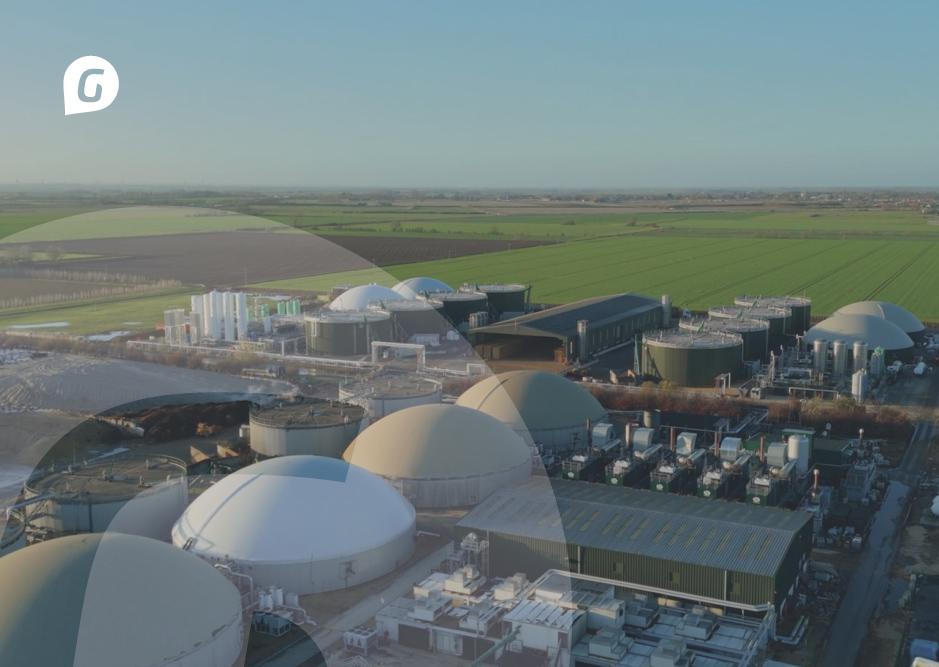
Europe has reached a new milestone in the development of biomethane. Installed production capacity reached 8.2 bcm per year at the end of the second quarter of 2026.
According to the European Biomethane Map 2026, published by the European Biogas Association (EBA) and Gas Infrastructure Europe (GIE).
This represents a 17% increase compared to 2025, with more than 1 bcm of new capacity added in a single year. Europe now has nearly 2,000 biomethane plants.
But the figure becomes even more significant when compared with the European target for 2030.

From 8.2 to 35 bcm: Europe’s biomethane challenge
Under the REPowerEU framework, Europe has set a target of reaching 35 bcm of annual biomethane production by 2030.
The current 8.2 bcm represents significant progress, but also highlights how much further the sector still has to go. Maintaining and accelerating the current growth rate will be essential to move closer to this target.
And to achieve it, the challenge is no longer simply identifying the available potential. It is turning that potential into real projects and operational plants.
What does a biomethane project need to become a reality?
Developing a biomethane plant involves much more than having access to organic matter.
1. Feedstock availability
Agricultural, livestock, agri-food and municipal waste can provide the resources needed to produce biogas and biomethane. Ensuring availability, quality and a stable supply is essential to the viability of projects.
2. Permitting and regulation
Administrative processes and regulatory frameworks have a direct impact on development timelines. A stable regulatory environment and efficient permitting procedures are essential to accelerating new facilities while maintaining environmental and safety standards.
3. Grid connection
A plant needs suitable infrastructure to inject the biomethane produced into the gas network. Grid capacity and connection availability can therefore become a decisive factor in project development.
4. Financing and offtake
The investment required and the visibility of future revenues are also key factors. Long-term biomethane offtake agreements can facilitate financing and provide greater stability for projects.
Investor interest in the sector is growing. The Biomethane Investment Outlook 2026 identifies €36 billion in investment commitments.
Biomethane: energy and the circular economy
The value of biomethane goes beyond renewable energy generation.
Its production enables waste to be valorised and transformed into an energy resource, while reducing emissions associated with waste management. The process also generates digestate, which can be used as a source of nutrients for agriculture when applicable requirements are met.
This makes biomethane a valuable tool for advancing towards a more circular model:
Waste → biogas → biomethane → renewable energy → nutrients → agriculture
Moreover, because biomethane can be produced from local resources, projects can contribute to strengthening energy security, reducing dependence on imported fossil gas and generating economic activity in rural areas.
From potential to real projects
The 8.2 bcm reached by Europe demonstrates that the biomethane sector is growing and becoming increasingly established within the European energy system.
The next step will be to maintain and accelerate this growth in order to move closer to the 35 bcm target for 2030.
Achieving this will require a combination of investment, regulation, infrastructure, access to feedstock and demand, as well as projects that are properly integrated from an energy, economic and territorial perspective.
In this context, platforms such as Twine work to integrate the different stages required to transform the potential of organic resources into viable and scalable biomethane projects.
Because the potential is there. Now, the challenge is turning it into reality