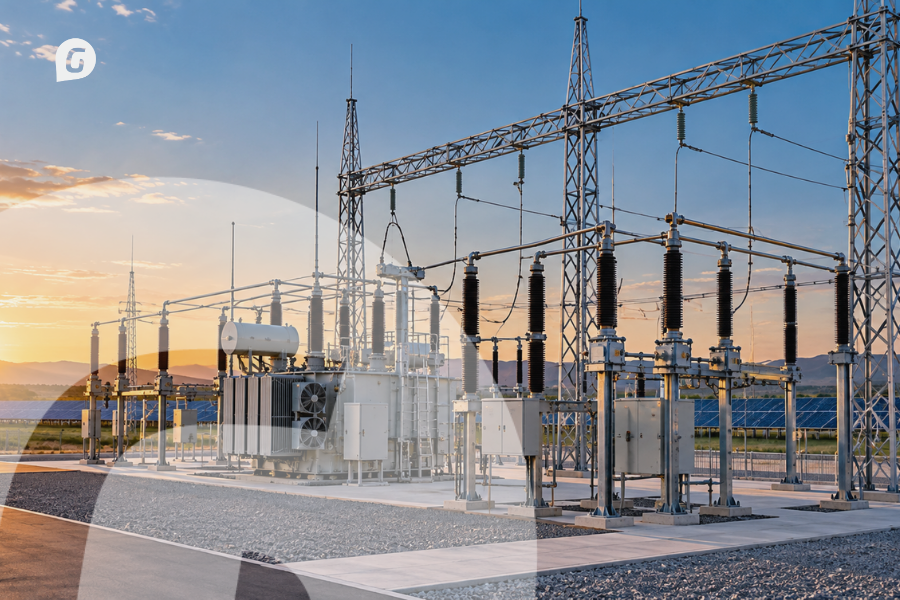
Electrical substation next to a solar energy plant

Electrical substations and modular solutions: what they are, how they work, and the advantages of E-Houses

The growth of renewable energy, energy storage, data centers, and other large electricity consumers is increasing the need to develop and strengthen electrical infrastructure.

In this context, electrical substations play an essential role in the transformation, protection, and distribution of electricity. At the same time, solutions such as modular substations and E-Houses are introducing new ways to design, manufacture, and install this type of infrastructure.

Modular E-House with integrated electrical equipment

What is an electrical substation?

An electrical substation is a facility that is part of the power system and makes it possible to transform voltage levels, connect different lines, and manage the flow of electricity between different points of the grid.

These facilities incorporate transformation, protection, switching, metering, and control equipment that makes it possible to operate electrical infrastructure safely and adapt voltage levels to the conditions required for transmission, distribution, or consumption.

For example, a substation can increase the voltage of the electricity generated at a renewable energy plant to facilitate its transmission through the grid or subsequently reduce it to bring it closer to the levels required for distribution and consumption.

What is an electrical substation used for?

Substations perform different functions depending on their location, configuration, and role within the power system.

Their main functions include:

  • Transforming voltage levels using transformers.
  • Connecting different lines and elements of the power grid.
  • Distributing electricity to different points of consumption.
  • Protecting the facility against faults or abnormal conditions.
  • Performing switching operations to connect or disconnect certain circuits.
  • Measuring and monitoring different electrical parameters.
  • Facilitating the control and operation of the infrastructure.


Therefore, a substation is not limited to transforming voltage. It also serves as a connection, protection, and control point within the electrical infrastructure.

How does an electrical substation work?

Its operation will depend on the type of facility, but it can be understood simply by following the path of electricity.

Energy reaches the substation through one or more power lines. Within the facility, different equipment makes it possible to transform voltage when necessary, perform switching operations, measure electrical parameters, and protect the infrastructure against potential incidents.

Equipment that may be part of a substation includes transformers, circuit breakers, disconnectors, protection systems, metering equipment, and control and communication systems.

Once the necessary operations have been carried out, electricity continues to another part of the grid, an industrial facility, a consumption center, or another electrical infrastructure.

The specific configuration will depend on factors such as voltage level, power, available space, connection characteristics, and the specific needs of each project.

What types of electrical substations are there?

There is no single type of substation. These facilities can be classified according to different criteria, such as their function, voltage level, location, or technology.

For example, depending on their function, there may be substations mainly intended to increase or reduce voltage, perform switching functions, or distribute electricity.

There may also be outdoor or indoor facilities, as well as solutions in which certain electrical equipment is integrated into buildings or modules specifically designed to house it.

This latter option has gained particular interest with the development of prefabricated and modular solutions that make it possible to move part of the work traditionally carried out on-site to controlled manufacturing facilities.

What is a modular substation?

A modular substation is a solution in which part of the electrical equipment and systems are pre-integrated into one or more modules that can be manufactured, assembled, and tested before being transported to the final site.

The objective of modularization is to move part of the engineering, integration, and assembly work from the installation site to a more controlled manufacturing environment.

This does not mean that all modular substations have the same configuration. The design will depend on power, voltage levels, required equipment, environmental conditions, transportation, and the specific requirements of the project.

Within this approach are E-Houses, one of the solutions used to integrate electrical equipment into prefabricated and transportable structures.

What is an E-House?

An E-House (Electrical House) is a modular and prefabricated structure designed to house and integrate electrical, control, and automation equipment before being transported to the final site.

Depending on the project, it can integrate medium- and low-voltage equipment, electrical panels, protection and control systems, automation, communications, and other auxiliary equipment.

One of its main characteristics is that these systems can be assembled, integrated, and tested at the factory before being installed in the field, reducing part of the work traditionally carried out on-site.

The configuration of an E-House will depend on the needs of each project: it can house specific equipment for an electrical infrastructure or form part of a broader substation solution.

What advantages do E-House solutions offer?

One of the main differences compared with construction carried out entirely in the field is the possibility of moving a significant part of the integration work to the factory.

1. Off-site manufacturing and integration

Part of the assembly and integration of the equipment can be carried out at the factory while other work progresses at the site, reducing dependence on certain field activities.

2. Testing before transportation

The systems can be tested before transportation, making it possible to verify their integration before they arrive at the final site.

3. Less on-site work

By moving part of the assembly and testing to the factory, certain tasks that would otherwise have to be carried out later on-site are reduced.

4. Project-specific design

The dimensions, equipment, auxiliary systems, and characteristics of each module can be defined according to the electrical, environmental, and logistical requirements of the facility.

5. Integration of different systems

A single structure can house electrical equipment, protection, control, automation, communications, and auxiliary services, facilitating their integration within the overall infrastructure.

Modular substation vs. conventional substation

Conventional substationModular solution / E-House
Greater volume of work carried out on-sitePart of the work is moved to the factory
Equipment integration mainly carried out in the fieldEquipment pre-integrated into modules
Testing of different systems during on-site executionPossibility of carrying out integration testing before transportation
Buildings and infrastructure mainly developed in situPrefabricated and transportable structures
The project is adapted to site conditionsThe module is also designed according to the specific needs of the project


This does not mean that one solution is always better than the other. The choice will depend on the technical, economic, logistical, and operational characteristics of each project.

Where can E-Houses and modular solutions be used?

Modular solutions can be used in projects that require efficient integration and distribution of electrical energy and where prefabrication provides advantages during execution.

Potential applications include:

  • Renewable energy generation plants.
  • Energy storage systems.
  • Industrial infrastructure.
  • Data centers.
  • Electrical infrastructure and utilities.
  • Facilities with space limitations or complex execution conditions.


Data centers are a particularly relevant case due to the expected growth in their electricity demand. According to the International Energy Agency, global electricity consumption by data centers could increase from around 415 TWh in 2024 to approximately 945 TWh in 2030, more than doubling in just six years.

This growth reinforces the need to develop electrical infrastructure capable of supporting the addition of new data centers.

Why will electrical infrastructure need to be reinforced?

The electrification of the economy is increasing the need for electrical infrastructure. Forecasts from the International Energy Agency indicate that global electricity demand increased by around 3% in 2025 and will grow at an average annual rate of 3.6% between 2026 and 2030, driven, among other factors, by industry, electric vehicles, air conditioning, and data centers.

This scenario involves not only developing new generation capacity, but also reinforcing the infrastructure required to transform, transmit, distribute, and manage electricity.

In this context, modular solutions represent an alternative for certain projects seeking to move part of the manufacturing, integration, and testing work away from the final site.

Greensol: electrical infrastructure and modular solutions

Greensol integrates engineering and construction capabilities for the development of energy and electrical infrastructure projects, including substations and grid connection infrastructure.

Its capabilities cover different phases of the project, from engineering and design to construction, installation, testing, and commissioning, adapting to the technical requirements of each facility.

Within this approach, modular solutions and E-Houses make it possible to integrate electrical equipment, protection, control, and communication systems into structures designed to facilitate their manufacturing, transportation, and installation at the final site.

The combination of engineering, execution, and modular solutions makes it possible to address the development of new electrical infrastructure with an integrated approach adapted to the needs of each project.

Frequently asked questions about electrical substations and E-Houses

An electrical substation is a facility that makes it possible to transform voltage levels, connect different parts of the grid, and perform protection, switching, metering, and control functions for electricity.

The transformer makes it possible to modify the voltage level of electricity. Depending on the function of the substation, it can increase the voltage to facilitate transmission or reduce it for subsequent distribution or consumption.

It is a solution in which some of the electrical equipment and systems are pre-integrated into modules manufactured and tested before being transported to the final site.

An E-House is a prefabricated and transportable electrical structure designed to house distribution, protection, control, automation, and other electrical systems.

Not necessarily. An E-House is a modular structure designed to house and integrate electrical and control equipment. Depending on its configuration, it can form part of a substation or be integrated into a broader electrical infrastructure solution.

Off-site manufacturing makes it possible to integrate and test some of the systems before transportation, reduce certain on-site work, and adapt the module to the technical and environmental requirements of each project.
Share

More articles

Do you have any questions about this blog or our services?

Contact our team and tell us what you need.

Get in touch
with us

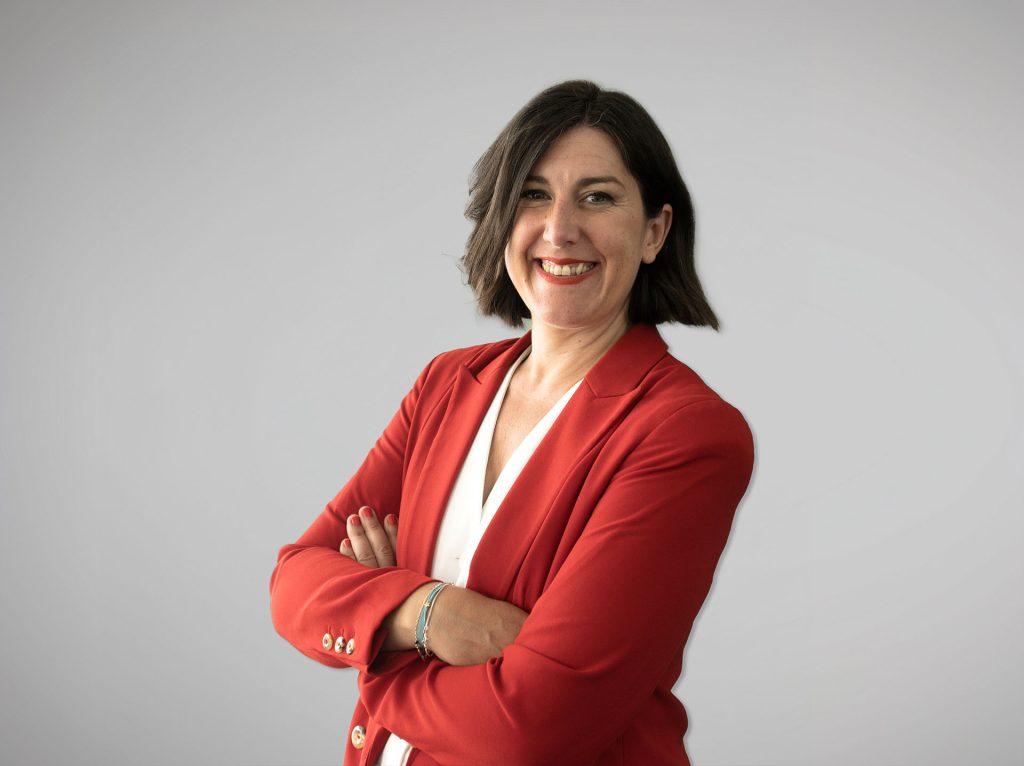
Lucía Lampón - GD DIRECTOR SPAIN

An Industrial Engineer specialized in energy, sustainability, and operations management, she brings more than 15 years of experience in the energy and renewable energy sectors. Throughout her career, she has held leadership positions across technical, production, and operational areas, leading multidisciplinary teams and managing power generation projects for leading companies in the industry. Her expertise spans project development, technical management, process optimization, and comprehensive operations management, combining a strong technical background with a strategic vision focused on efficiency and operational excellence. Currently, as Head of Distributed Generation Spain at Greening, she drives the growth and consolidation of the company’s distributed generation business, contributing to the development of sustainable energy solutions and strengthening Greening’s position in the market.

Arianna Tinaburri – CLO ITALY (Chief Legal Officer Italy)

texto

Alejandro Ruiz – COUNTRY MANAGER ITALY

texto

Christof Glasmacher – Key Account Manager

In dieser Rolle verantwortet er die strategische Betreuung und Weiterentwicklung von Schlüsselkundenbeziehungen. Mit einem klaren Fokus auf nachhaltige Lösungen und partnerschaftliche Zusammenarbeit entwickelt er individuelle Konzepte, die sowohl ökologische als auch wirtschaftliche Mehrwerte schaffen.

Seit über 30 Jahren ist er im Vertrieb erklärungsbedürftiger technischer Produkte tätig und bringt umfassende Erfahrung in der Kundenbetreuung und Projektentwicklung mit.

Durch seine ausgeprägte Kundenorientierung, Marktkenntnis und Kommunikationsstärke trägt er maßgeblich zum Wachstum und zur Positionierung der Greening GmbH als innovativen Anbieter im Bereich nachhaltiger Technologien bei.

Sein Fokus liegt auf nachhaltigen Energielösungen und der partnerschaftlichen Zusammenarbeit mit Kunden und Ingenieuren.

Josu Egea – Country Manager Germany

Geschäftsführer mit über 20 Jahren Erfahrung in der Leitung technischer und multidisziplinärer Teams in anspruchsvollen internationalen Umgebungen.

Josu verfügt über umfassende Erfahrung in den Bereichen erneuerbare Energien, Photovoltaik und Energiespeichersysteme (BESS), mit einem klaren Fokus auf Innovation, operative Effizienz und nachhaltiges Wachstum. Experte für Verhandlungsführung, kaufmännisches Management, industrielle Abläufe und internationale Geschäftsentwicklung.

Josu hat eine fundierte technische Ausbildung als Industrieingenieur, ergänzt durch einen MBA, wodurch er seine strategischen Visionen mit der operativen Umsetzung optimal verbinden kann.

Pilar Monzón Rubio – Head of Development – Investments

Pilar Monzón leitet den Bereich Projektentwicklung für Erneuerbare Energien bei der Greening Group in Deutschland, mit Sitz in der Zentrale in Düsseldorf. Sie ist verantwortlich für die Expansionsstrategie von Investments auf dem deutschen Markt und koordiniert alle Phasen der Projektentwicklung – von der Identifikation von Chancen bis hin zur Strukturierung und Umsetzung.

Mit über einem Jahrzehnt Erfahrung im Bereich Erneuerbare Energien, Ingenieurwesen und Unternehmensentwicklung in Deutschland bringt Pilar eine strategische Sichtweise, eine hohe Umsetzungskompetenz und eine klare Ergebnisorientierung mit. Ihr Führungsstil basiert auf sorgfältiger Analyse, der Zusammenarbeit mit interdisziplinären Teams und einem starken Engagement für Nachhaltigkeit als Wachstumsmotor.

Sie ist Architektin und besitzt einen Master in Energiemanagement und Internationalisierung von Projekten, eine Ausbildung, die ihren technischen Fokus stärkt und ihr eine globale Sichtweise verleiht, die an anspruchsvolle regulatorische Rahmenbedingungen angepasst ist.

Hartmut Bergs – Head of Operations Germany

Hartmut Bergs ist ein erfahrener Bau- und Projektmanager mit über 20 Jahren internationaler Expertise in erneuerbaren Energien, Industrie- und Großbauprojekten. 

Seit Dezember 2023 leitet er als Head of Operations bei der Greening Group operative Abläufe und Projektumsetzungen. 

Zuvor verantwortete er bei EnviTec Biogas AG, ENERCON und weltweit Bau, Installation und Inbetriebnahme komplexer Anlagen im Bereich Biogas und Windenergie. Seine Karriere begann er als Bauleiter im Industrie- und Photovoltaikdachbau bei Pohlen Bedachungen/ Solar sowie als Bauleiter in der Petrochemie.
Absolvent der Rheinischen Fachschule Köln als staatlich geprüfter Techniker für Hochbau und Fachkraft für Arbeitssicherheit, verfügt er über ausgeprägte Führungsqualitäten in der Leitung großer, multinationaler Baustellenteams. Mit technischer Präzision, Organisationsstärke und einem hohen Sicherheitsbewusstsein sorgt er für den reibungslosen Ablauf und die erfolgreiche Umsetzung komplexer Projekte im internationalen Umfeld.

Antonio Nievas – COO Solutions

Master Civil Engineer with an MBA and C-Suite executive education from IESE, with additional specializations in corporate sustainability and renewable energy investment and financing. He has over 25 years of senior management experience in both large-scale civil infrastructure and energy sectors.

He has led complex projects and strategic initiatives in national and international markets, including Ireland, United Kingdom, and, for the past 12 years, United States. His profile combines strong technical expertise with strategic vision, contributing to innovation and operational excellence. 

Tobias Deissler - Head of Business Development USA

Originally from Germany, Tobias is the Chief Commercial Officer (CCO) of Greening  and has over 16 years of experience in the renewable energy sector. He joined Greening Ingeniería in 2019 as Managing Director, leading the company’s international expansion since then. Tobias holds a degree in Civil Engineering and a master’s in international economics. He began his professional career in Germany, where he gained experience in Procurement and Logistics at companies such as Berner Group and Riese & Müller. Throughout his career, he has held international leadership positions, including Chief Operating Officer (COO) of the Assyce Group in Spain and Managing Director of its Asian division.

Adrian Ortega – Development Director USA

Development Director at Greening USA, where he leads the full-cycle development of large-scale energy projects. With a degree in Industrial Engineering from the Polytechnic University of Madrid and an MBA from the Granada Chamber of Commerce, Adrian brings strong technical and strategic insight to the company. Since joining Greening in 2019, he has developed solar projects across Spain, Mexico, and the United States. His expertise includes resource assessment, technical and economic feasibility analysis, and the design, optimization, and management of energy recovery facilities.

Claudia Pastor – Finance Director USA

Finance Director for Greening USA, overseeing financial operations and tax planning across North America. With over 12 years of experience in international finance and strategic planning, including the last 7 years dedicated to the solar photovoltaic industry, she brings deep sector knowledge and a global perspective to the team. Her role is pivotal in ensuring full regulatory compliance while driving the company’s long-term financial sustainability and growth in the region. Claudia’s leadership strengthens Greening’s position as a reliable and future-ready partner in the U.S. renewable energy market.

Florencia Ortiz – Head of Legal USA

Head of Legal at Greening USA, where she leads all legal, commercial, and regulatory matters for the region. With extensive experience advising multinational companies in the renewable energy and infrastructure sectors, she serves as both in-house and external counsel on complex transactions and regulatory compliance across the U.S., Brazil, and Argentina. Her legal expertise and strategic counsel play a key role in ensuring the success and integrity of Greening’s operations in dynamic and highly regulated markets.

Alejandro Ruiz – Director of Greening Europe

A Civil Engineer with an Executive MBA from Luiss Business School, he has built a strong international career in the renewable energy sector and infrastructure project management. With more than a decade of experience in business development and operational leadership, he successfully led Greening’s expansion in Italy and currently oversees the company’s European operations as European Director. Specialized in corporate strategy, business development, project execution, and organizational transformation, he combines a global perspective with deep local market expertise to drive sustainable growth, coordinate multidisciplinary teams, and create long-term value across international markets.

Pablo Otín – CEO (Chief Executive Officer)

CEO of Greening since 2026, where he leads the Group’s global strategy and oversees the execution of its renewable energy businesses. He brings more than 20 years of experience in the energy sector, with a strong track record in the development, financing, and management of utility-scale solar photovoltaic and battery energy storage system (BESS) projects. Throughout his career, he has held executive positions at leading international companies such as Grenergy, Powertis, Gestamp Solar, and Gamesa, participating in large-scale energy projects and leading international teams across multiple markets. He specializes in greenfield project development, structured finance, mergers and acquisitions (M&A), power purchase agreements (PPAs), asset management, and cost optimization, playing a key role in driving the growth and international expansion of renewable energy companies.

Sergio Prado - Director of Greening North America

General Manager of Greening USA, responsible for executing the company’s strategic vision and expansion across the North American market. With a background in chemical engineering and a Master’s in Sustainable Energy Systems from the University of Edinburgh, he brings a strong technical foundation and industry insight. Throughout his career, Sergio has held leadership roles in various companies specialized in photovoltaic energy, building a track record of successful growth and market entry strategies. His combined experience in engineering, sales, and management makes him a key driver of Greening’s growth in the United States.

Felipe García - CFO (Chief Financial Officer)

Chief Financial Officer (CFO) of Greening since 2026, where he leads the Group’s financial strategy and supports the execution of its growth plan and long-term value creation for shareholders. He brings extensive international experience in finance roles across the energy and consulting sectors. Before joining Greening, he held several senior leadership positions at Siemens Gamesa, including Managing Director Finance and Finance Head EMEA, overseeing financial operations in complex multinational environments. Prior to that, he spent more than eight years at EY, specializing in due diligence processes and financial structuring for major transactions involving private equity funds, financial institutions, and industrial companies.

Isidro Ramírez - CHRO (Chief Human Resources Officer)

He holds a degree in Business Administration and has developed his career in highly dynamic environments, ranging from the retail sector to the technology and financial industries, including Spain’s first credit rating agency. He is a specialist in talent development, innovative people management, and organizational transformation, with extensive experience in M&A processes and company integrations. With over 25 years of experience leading complex projects and international strategies, he combines strong technical expertise with broad executive experience, enabling him to drive innovation and operational excellence in any organization.

Raquel Lacilla - CLO (Chief Legal Officer)

She holds a dual degree in Law and Business Administration from the University of Zaragoza, with additional studies at the University of Bologna, and is a member of the Madrid Bar Association (ICAM). She has over 15 years of experience in corporate legal advisory, particularly in the renewable energy and infrastructure sectors. She currently serves as Global Legal & Compliance Director at Greening Group, and as Non-Director Secretary of the Board of Directors and its delegated Audit and Appointments & Remuneration Committees. She has held key positions at ENGIE Spain and SICE (part of the ACS Group, now under Vinci Group), and has practiced as a corporate lawyer and external advisor to companies in law firms in Spain and Ireland, specializing in corporate, contractual, and financial matters.

María Dolores Cuadrado - GMD Assistent

Titulada en Secretariado de Dirección Bilingüe y Licenciada en Ciencias Políticas y Sociología posee una larga trayectoria desarrollando el rol de Asistente de Dirección en empresas multinacionales como ITM Ibérica, apoyando a la alta dirección en la organización, planificación y gestión de tareas clave. Esta experiencia le ha permitido adquirir una gran capacidad de organización, comunicación efectiva y un enfoque resolutivo en entornos exigentes. Además, cuenta también con amplia experiencia profesional en el area comercial y de atención al cliente, trabajando en diferentes sectores y liderando equipos orientados a resultados.

D. Ignacio Salcedo Ruiz - Executive Chairman

Co-founder and Executive Chairman of Greening. Since founding the group in 2011, he has led its growth into an integrated energy platform with an international presence across Europe, the Americas, and Africa. Holding a degree in Civil Engineering from the University of Granada and an Executive MBA from EOI Business School, he has built a strong track record in the development, engineering, and execution of energy projects. Under his leadership, Greening has established a vertically integrated business model spanning power generation, engineering, energy retail, and technology-driven solutions for the energy transition. As Executive Chairman, he currently oversees the group’s corporate strategy and business development, driving its international expansion and new growth initiatives within the renewable energy sector.