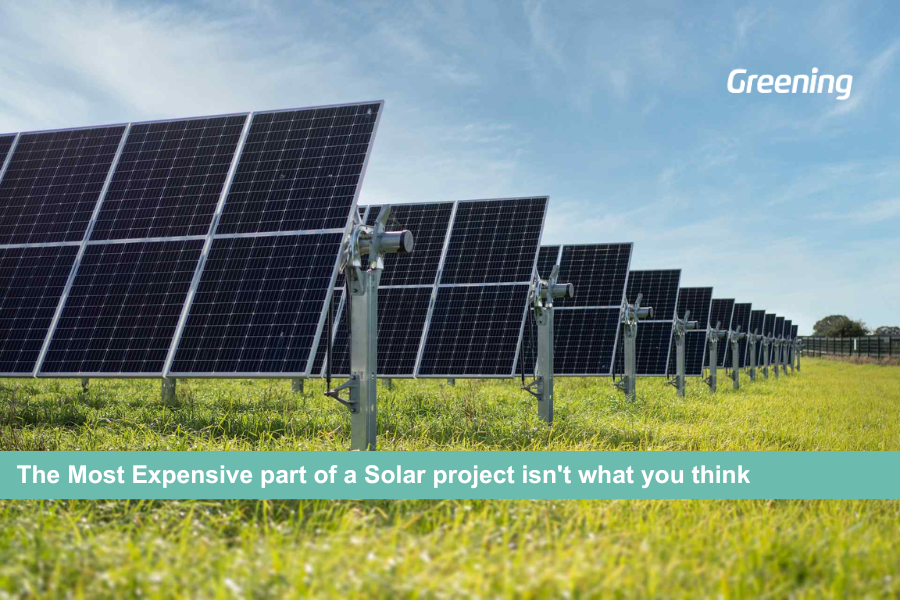
When people think about the cost of a utility-scale solar project, they often focus on the obvious expenses: solar modules, inverters, trackers, transformers, and other major equipment. While these components represent a significant investment, they are not always the factors that have the greatest impact on a project’s final cost.
Some of the most expensive challenges in solar development are far less visible. Delays, design changes, permitting issues, supply chain disruptions, and coordination gaps can significantly affect project schedules and budgets. In many cases, these hidden costs can outweigh fluctuations in equipment pricing.
The Price of time
Time is one of the most valuable resources in any energy project. Every delay can create a ripple effect across procurement, construction, financing, and project commissioning.
According to the National Renewable Energy Laboratory (NREL), project delays can increase overall costs through extended development timelines, additional labor requirements, contractual impacts, and lost revenue opportunities associated with postponed commercial operation dates (NREL, 2024).
For developers and investors, a project that reaches commercial operation several months later than expected may face not only higher construction costs but also delayed returns on investment.
Permitting and regulatory complexity
As the U.S. renewable energy market continues to expand, permitting has become one of the most critical stages of project development.
A report from the U.S. Department of Energy highlights that permitting and approval processes can significantly influence project timelines, particularly as projects become larger and interconnection requirements become more complex (U.S. Department of Energy, 2024).
While permitting is a necessary step to ensure environmental and community considerations are addressed, navigating these requirements effectively requires experience, planning, and strong stakeholder coordination.
Projects that anticipate regulatory requirements early are often better positioned to avoid costly schedule adjustments later in the process.
Supply chain challenges extend beyond equipment
The solar industry has made significant progress in stabilizing supply chains following recent global disruptions. However, logistics and procurement remain key factors in project success.
According to Wood Mackenzie, supply chain constraints, transportation bottlenecks, and shifting market conditions continue to influence project execution across the renewable energy sector (Wood Mackenzie, 2025).
Even when equipment is available, delays in transportation, site delivery, or installation of sequencing can impact construction schedules. Effective planning and coordination are essential to maintaining project momentum and minimizing unnecessary costs.
The cost of rework
One of the least discussed, but potentially most expensive, challenges in construction is rework.
Design modifications, unforeseen site conditions, or coordination issues between project stakeholders can require adjustments after construction has already begun. These changes often result in additional labor, material usage, and schedule impacts.
Research published by the Construction Industry Institute (CII) has consistently shown that rework remains a significant contributor to project cost overruns across large infrastructure projects (CII, 2023).
The most successful projects are often those that invest heavily in engineering, planning, and quality control long before construction activities begin.
Why Execution matters more than ever
As utility-scale solar projects continue to grow in size and complexity, execution has become a competitive advantage.
Technology is increasingly standardized across the industry. What often differentiates project outcomes is the ability to manage risk, coordinate stakeholders, maintain quality standards, and deliver projects on schedule.
Successful project execution requires a comprehensive approach that integrates engineering, procurement, construction, logistics, safety, and quality management from the earliest stages of development.
Building certainty into every project
At its core, utility-scale solar is not simply about installing equipment. It is about delivering reliable energy infrastructure on time, on budget, and with long-term performance in mind.
At Greening, we understand that reducing uncertainty is one of the most valuable services an EPC partner can provide. Through integrated engineering, procurement, and construction capabilities, our team works to anticipate challenges, optimize execution, and support successful project outcomes from development through commissioning.
As the renewable energy sector continues to evolve, experience, planning, and execution remain some of the most important factors in creating long-term project value.
To learn more about how Greening supports utility-scale solar and energy infrastructure projects across the United States, contact our team at info.us@greening-group.com.