Spain is attracting growing interest in the development of data centers, driven by the expansion of digital services, artificial intelligence, cloud computing, and increased data processing capacity.
The connection of data centers to the power grid is introducing a new variable into energy planning: the need to supply large amounts of electricity to facilities that require continuous consumption and high levels of availability.
The latest data published by Red Eléctrica reflect the scale of this trend: data processing centers already account for 6,329 MW of granted access capacity on Spain’s transmission grid, although this capacity is not yet in service. The challenge for the coming years will be to integrate this growth into a power system that is also moving toward greater electrification and a higher penetration of renewable energy.

The growth of data centers in Spain
Data centers are becoming essential infrastructure for the functioning of the digital economy.
Cloud services, information storage, business applications, artificial intelligence, digital platforms, and the processing of large volumes of data depend on these types of facilities.
Spain has also positioned itself as one of the European markets with the greatest potential for new projects, thanks to factors such as its international connectivity, the availability of land in certain areas, and the growth of renewable energy generation.
But the development of new facilities is tied to an essential resource: electricity.
How much electricity capacity has been granted to data centers?
According to data published by Red Eléctrica in October 2026, the transmission grid has 18.52 GW of access capacity granted to new demand.
Within this volume, data processing centers represent the category with the largest amount of capacity granted, with 6,329 MW, equivalent to approximately 34% of the total.
However, there is an important difference between having an access permit and having an operational facility.
Granted capacity indicates that the project has access rights to the grid under certain conditions, but this does not necessarily mean that the demand is already connected or that the project has begun consuming electricity.
For this reason, granted capacity figures should be interpreted as an indication of the volume of planned projects, not as current electricity consumption.
Why do data centers need so much electricity?
A data center requires continuous electricity to keep different systems operating:
- Servers and IT equipment.
- Storage systems.
- Communications networks.
- Cooling.
- Auxiliary power supply.
- Security and backup systems.
In addition, the growth of computing-intensive applications, particularly artificial intelligence, is increasing the power density of certain facilities.
This means that some projects require electricity supply levels comparable to those of large industrial facilities, reinforcing the debate around the growing energy demand of data centers.
Why is the connection of data centers to the power grid key?
The availability of electricity capacity is becoming one of the determining factors in the development of new data centers.
Not all points on the grid have the same available capacity and, in certain locations, connection may require additional work or affect project timelines.
For this reason, data center planning does not depend solely on land or digital connectivity. From the earliest stages, it is also necessary to analyze aspects such as:
- Available grid capacity.
- Connection point.
- Required power.
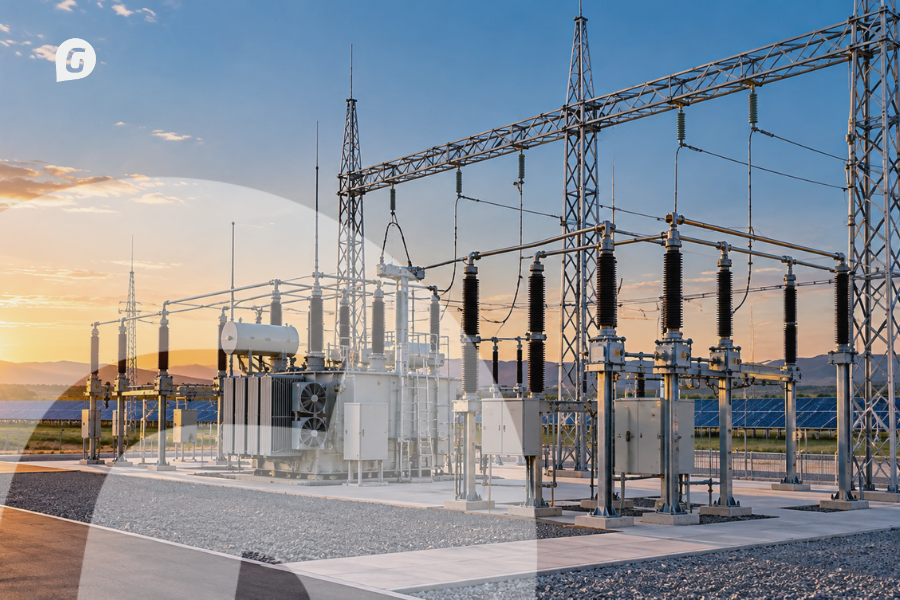
- Transformation infrastructure.
- Access and connection timelines.
In this context, electricity availability becomes a structural condition for the development of new projects.
What challenges does this growth pose for the power system?
The expansion of data centers coincides with other processes that are also increasing electricity demand.
Industrial electrification, electric vehicles, hydrogen production, and air conditioning are progressively increasing consumption needs.
Therefore, the challenge is not only to supply electricity to new data centers, but to do so while maintaining the balance between generation, demand, grid capacity, and security of supply.
This requires coordinating different elements:
new demand + grid planning + new generation + storage + flexibility
As the number of large consumers increases, electricity planning must anticipate where new capacity needs will emerge.
More demand also requires more grid capacity
The increase in electricity consumption cannot be addressed solely by adding new generation.
It is also necessary to have a grid capable of transmitting, transforming, and distributing that electricity to the points where demand is concentrated.
When new large-scale loads such as data centers emerge, system planning must assess whether existing infrastructure can accommodate that demand or whether new measures will need to be developed.
This may involve reinforcement of transmission and distribution grids, substation expansions, or new connection infrastructure.
Therefore, the growth of data centers depends not only on having sufficient energy available, but also on having grid capacity to deliver it to each project.
Data centers and renewable energy: the challenge of continuous supply
Spain has a high penetration of solar and wind energy, an important factor for projects seeking to reduce the carbon footprint associated with their electricity consumption.
However, renewable generation is variable: solar production is concentrated during daylight hours and wind generation depends on wind availability, while data centers require electricity continuously.
This difference between generation and consumption makes resources capable of providing greater flexibility to the system particularly important, such as energy storage, demand management, interconnections, and proper grid planning.
From granted capacity to actual operation
Granted access capacity provides an indication of the level of interest and the volume of planned projects, but it should not be interpreted as current electricity consumption.
Several years may pass between obtaining permits and a data center becoming operational. During that time, the project must progress through stages such as development, financing, construction, and the implementation of the infrastructure required for its connection.
In addition, some projects may be modified, reduce their planned capacity, or ultimately not be developed.
For this reason, the actual evolution of the sector will depend on how many projects successfully complete the entire process:
development → permits → financing → construction → connection → operation
What does the growth of data centers mean for Spain’s power system?
The growth of data centers represents an opportunity to strengthen digital infrastructure and attract new technology investment, but it also introduces a new scale of electricity demand.
The more than 6 GW of access capacity granted shows that data centers already have a significant role in system planning.
Their development will require coordination between the evolution of power grids, the addition of new generation capacity, and the availability of capacity at the locations where these projects are concentrated.
The challenge will not only be to build new data centers, but to integrate them into a power system capable of meeting increasingly large, more localized demand with higher requirements in terms of continuity of supply.
Frequently asked questions about data centers and the power grid
How much electricity capacity has been granted to data centers in Spain?
According to data published by Red Eléctrica, data processing centers have 6,329 MW of access capacity granted on Spain’s transmission grid.
Are data centers already consuming those 6,329 MW?
No. That figure corresponds to granted access capacity, not current electricity consumption. Some of the projects are not yet in service.
Why do data centers need so much electricity?
Because they require continuous power for servers, storage systems, cooling, communications, auxiliary equipment, and backup systems.
What is the difference between requested, granted, and commissioned capacity?
Requested capacity corresponds to the amount of power a project requests to connect to the grid. Granted capacity indicates that it has access under certain conditions. Commissioned capacity corresponds to facilities that are already operational.
Can the power grid accommodate all the expected growth in data centers?
It will depend on the available capacity in each area, grid reinforcements, system planning, and the actual pace at which the projects are developed.
What is the relationship between data centers and renewable energy?
Data centers can consume large amounts of electricity and operate continuously, while solar and wind generation is variable. This increases the importance of combining new generation with grids, storage, flexibility, and energy planning.
Will all granted capacity become new data centers?
Not necessarily. There are different stages of development between access being granted and the project becoming operational, and some projects may be modified, reduced, or ultimately not be developed.