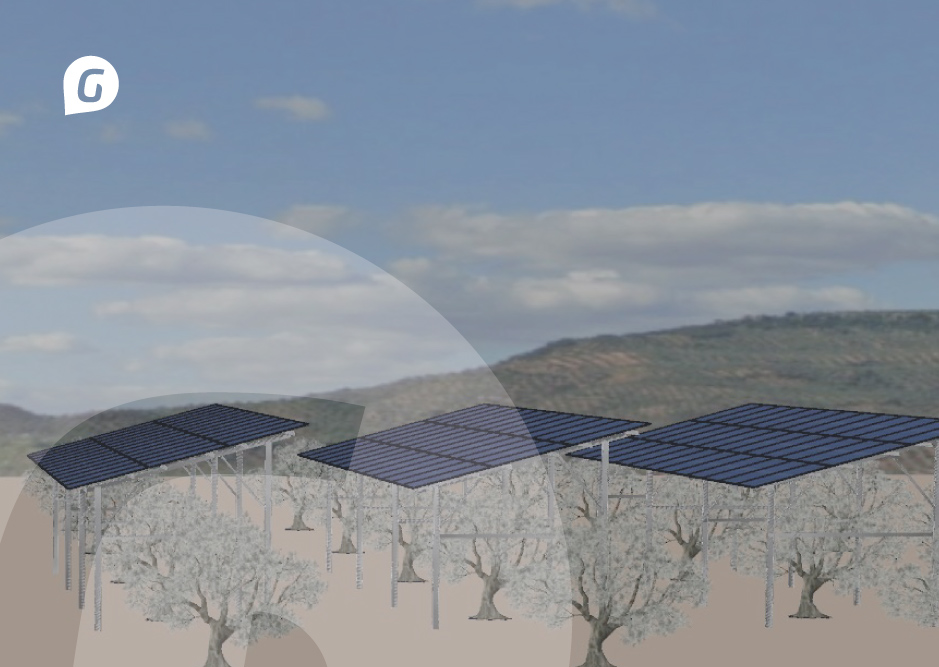
- The project integrates photovoltaic generation, battery energy storage and agrivoltaics in a productive olive grove, creating a new energy management model for the agri-food industry.
- The solution combines self-consumption, energy storage and flexibility to optimize energy use, reduce grid dependence and enhance the competitiveness of industrial customers.
- The initiative reinforces Greening’s strategy of delivering integrated energy solutions that combine renewable generation, intelligent energy management and storage to accelerate industrial decarbonization.
Madrid, August 3, 2026. Greening and ACESUR, in collaboration with the University of Jaén, have developed one of Spain’s first projects to integrate photovoltaic generation, battery energy storage and agricultural production within an operational olive grove in Vilches (Jaén), creating a new energy management model for the agri-food industry.
The initiative is part of Greening’s 2026–2030 Strategic Plan, aimed at consolidating an integrated energy platform capable of delivering solutions that combine renewable generation, self-consumption, energy storage and flexibility to optimize energy management for industrial customers.
The project combines an industrial self-consumption photovoltaic plant with a Battery Energy Storage System (BESS) installed in a fully productive olive grove, preserving 100% of the existing olive trees while allowing normal agricultural operations to continue.
With an installed capacity of 3.65 MWp and more than 5,150 photovoltaic modules mounted on elevated structures over four metres high, the installation enables renewable energy generation while maintaining day-to-day farming activities. The 3 MWh battery storage system provides the flexibility required to intelligently manage the energy produced, increase self-consumption and adapt energy use to the operational needs of the industrial facility.
Thanks to this solution, ACESUR is advancing towards a more efficient and competitive energy model by reducing its exposure to electricity market volatility, optimizing energy costs and strengthening the sustainability of its industrial operations.
The project’s scientific dimension further reinforces its innovative character. The University of Jaén will use the installation as a living laboratory to study the impact of agrivoltaics on olive cultivation, evaluating parameters such as agricultural productivity, water stress, soil temperature and the interaction between energy generation and agricultural activity.
“The energy transition is no longer just about generating renewable energy. The real value lies in managing it intelligently. This project demonstrates how integrating renewable generation, storage and flexibility enables more efficient, resilient and competitive energy solutions for industry. At Greening, we are building an integrated energy platform capable of supporting our customers across the entire energy value chain and accelerating their transition towards a more sustainable and profitable model,” said Pablo Otín, CEO of Greening.
Thanks to its design, technological integration and intelligent energy management approach, the Vilches project represents a replicable model for the agri-food sector and other energy-intensive industries. The initiative reflects Greening’s evolution towards integrated energy solutions, where renewable generation, storage and flexibility work together to maximize efficiency, competitiveness and sustainability across industrial processes, fully aligned with the company’s 2026–2030 Strategic Plan and the transition towards a more decentralized, flexible and customer-focused energy system.
Read more: eleconomista.es