As energy markets continue to evolve across the United States, companies are facing increasing pressure to manage operational costs, improve energy resilience, and meet long-term business goals in an increasingly unpredictable environment.
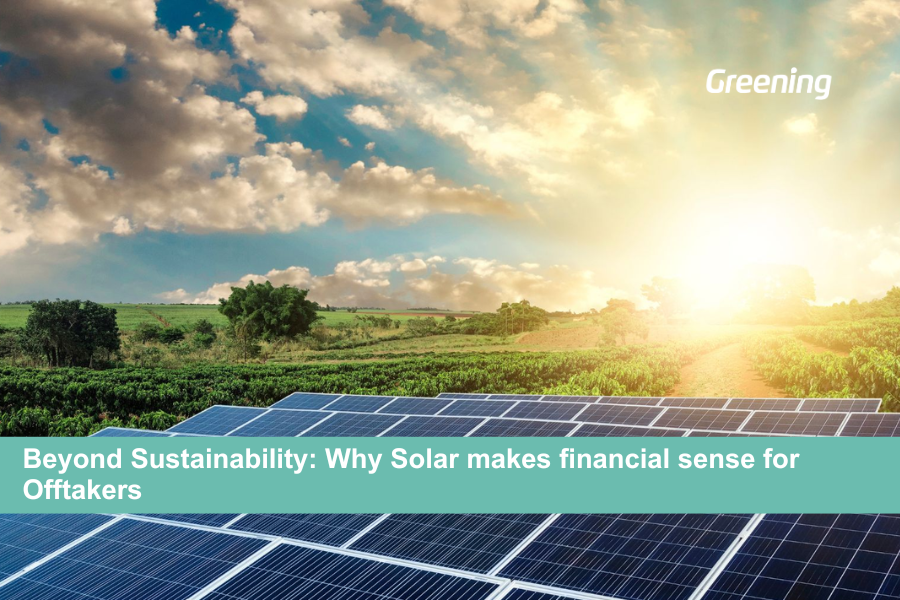
For many organizations, renewable energy was once viewed primarily as a sustainability initiative, an important step toward reducing environmental impact and supporting ESG commitments. Today, however, solar energy has become much more than that. It is increasingly being recognized as a strategic financial decision.
From predictable electricity pricing to long-term operational savings, more offtakers are turning to solar not only to support sustainability targets, but to strengthen their financial positioning in a rapidly changing energy landscape.
Predictable energy costs in an uncertain market
One of the biggest challenges companies face today is energy price volatility. Fluctuating utility rates, inflationary pressures, and increasing electricity demand have created uncertainty for businesses trying to forecast long-term operational expenses.
Solar energy offers a different approach.
Through long-term agreements such as Power Purchase Agreements (PPAs), offtakers can secure more stable and predictable energy pricing over time. This visibility allows companies to improve financial planning, reduce exposure to market fluctuations, and create greater certainty around future energy costs.
For organizations with large-scale operations or energy-intensive facilities, this level of predictability can become a significant competitive advantage.
Solar as a long-term financial strategy
Beyond short-term savings, solar projects are increasingly being viewed as part of a broader long-term financial strategy.
Renewable energy can help companies reduce operating expenses over time while also supporting long-range procurement planning. As electricity demand continues to rise across industries such as manufacturing, logistics, technology, and data infrastructure, businesses are looking for ways to secure reliable energy sources that align with both financial and operational objectives.
In many cases, solar energy also serves as a hedge against inflation and future utility price increases. By integrating renewable energy into their long-term strategy, companies can create more stable cost structures while improving overall energy resilience.
Tax incentives and Market momentum
The continued expansion of renewable energy across the United States has also been accelerated by federal incentives and growing investor confidence in clean energy infrastructure.
Recent legislation and market initiatives have created new opportunities for companies seeking to participate in renewable energy projects while optimizing long-term value creation. As a result, corporate demand for renewable energy solutions continues to grow across multiple sectors.
At the same time, stakeholders, including investors, customers, and partners, increasingly expect companies to demonstrate measurable progress toward sustainability and energy transition goals. Solar energy allows organizations to address these expectations while also supporting financial performance.
Why Execution matters: The role of EPC Expertise
While the financial advantages of solar are increasingly clear, successful project execution remains critical.
Factors such as engineering quality, construction timelines, safety standards, grid interconnection, and long-term project reliability all play an essential role in maximizing project value. This is where experienced EPC partners become especially important.
Efficient execution not only helps projects remain on schedule and within budget, but also ensures that infrastructure is built to support long-term operational performance.
As renewable energy adoption continues to scale across the U.S., companies are increasingly prioritizing partnerships with EPC firms that bring technical expertise, execution capabilities, and a strong commitment to quality and safety.
Looking ahead
The conversation around renewable energy is changing.
What was once considered primarily an environmental initiative is now becoming a core component of financial and operational strategy for businesses across the country. Solar energy is no longer only about sustainability, it is about long-term competitiveness, resilience, and smarter energy planning.
As the energy market continues to evolve, organizations that proactively invest in stable and scalable energy solutions will be better positioned to navigate future challenges and opportunities.
At Greening, we continue supporting the development of reliable and scalable renewable infrastructure that helps businesses move toward a more efficient and sustainable energy future.
For more information, contact us: info.us@greening-group.com